#805 — June 18, 2026 |
|

Ruby Weekly |
|
|
The Plan for André Arko |
⚡ "You can go straight from |

Hiring Rails Engineers Takes Months. We Start Next Week! — Since '17, teams have trusted us to upgrade Rails. The same engineers are now available for staff augmentation: shipping features, squashing bugs, and reviewing the AI-generated PRs piling up in your queue. Skip the 6-month hiring slog. Let's talk. 🚀 FastRuby.io® | Staff Augmentation sponsor |
|
Scaling Rails for a Peak Load of 41M Requests/Hour — A retrospective on how a digital photo-frame service scaled its app for peak load at Christmas. As well as splitting a single primary database into eight, a mix of Rails techniques made it work: native multiple databases, Andrew Atkinson |
|
⚡️ IN BRIEF:
|
|
Rails, The Sharp Parts: An Index Is Not a Plan — A look at seven ways a database index can go unused without you noticing and, crucially, what to do to make it work as intended. Brandon Weaver |
|
How I Think About Tests: Skips — When is skipping a test the right move, and when does it erode the signal skips are supposed to provide? A Shopify engineer shares his approach for keeping skips rare and meaningful. Hartley McGuire |
|
Depot CI Now Supports Nested Virtualization — Run Android Emulators and other nested VM workloads directly in Depot CI sandboxes. No extra config needed. Depot sponsor |
|
📄 Exploring Automatic Buffer Management with 📄 What are Git Worktrees, and Why Should I Use Them? – A decade-old 📄 RubyConf 2026 is Where Ruby's Next Chapter Begins Ruby Central 📄 How to Parallelize Your RSpec Test Suite Locally Aysan Isayo 📄 Lisp's Influence on Ruby Ian Johnson |
🛠 Code & Tools |
|
|
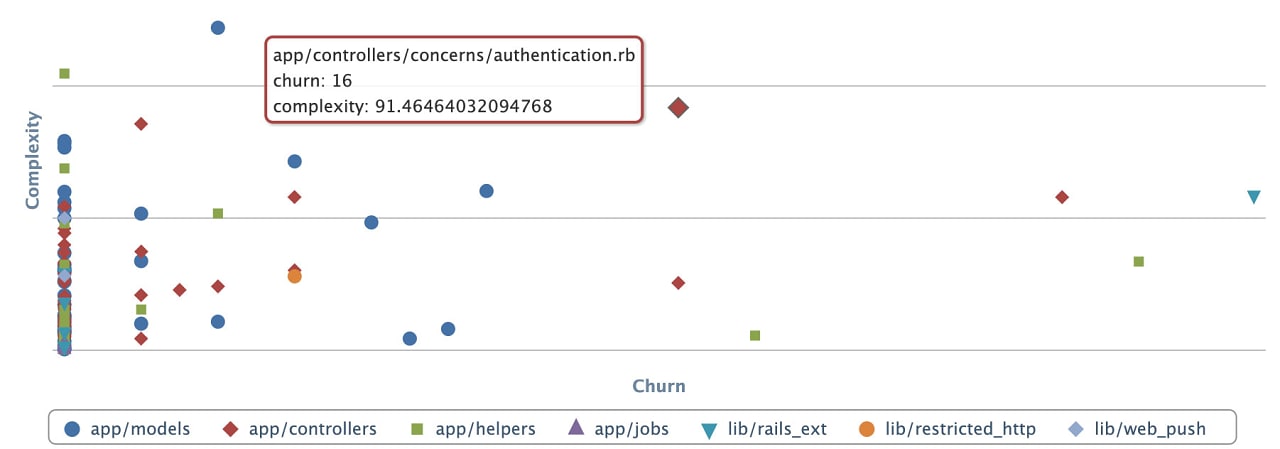
Turbulence: Visualize Churn vs Complexity in Your Codebase — Kerri Miller has revived an old project from Chad Fowler (co-creator of RubyGems) that helps you identify prime candidates for refactoring in Ruby projects. Chad Fowler and Kerri Miller |
|
Production Monitoring by Ruby Devs, for Ruby Devs — Our founders built Honeybadger to fix their own production headaches. We think it can fix yours too → Honeybadger sponsor |
|
Kino: A High-Perf Ractor-Based Web Server for Ruby 4.0+ — A Rack 3-based server built around Ractors with benchmarks showing huge memory savings and scaling gains versus Puma. It’s very bleeding edge, though, and can only serve Rails apps in a slower, threaded fallback mode. Yaroslav Markin |
|
|
🤩 Yusuke Endoh's Obfuscated C Code |
|
The IOCCC (International Obfuscated C Code Contest) is a competition to "write the most obscure/obfuscated C program" possible within a set of rules. C, being C, makes all sorts of bizarre horrors possible, so the winning entries tend to make for interesting reading. One of the IOCCC's most successful participants is Ruby committer Yusuke Endoh, who you might know from his Ruby-powered 'quine relay', work on TypeProf, and experiments with ▶️ esoteric and artistic programming in Ruby. The winning entries of IOCCC 2025 were announced recently and Yusuke won three times with these three entries, all of which are worth checking out. His third entry (see the code here), written in tribute to Perl creator Larry Wall, is a self-modifying quine chain that hides a Excuse this slightly odd way to cap off an issue of Ruby Weekly, but as well as being fun to look at and think about, Yusuke's work is a great reminder of the human creativity still involved in coming up with novel solutions in code! P.S. This 366-character emulator (not by Yusuke) that can run Linux and Doom is also a bit of a mind bender. |