#822 — October 22, 2026 |
|

Ruby Weekly |
|
|
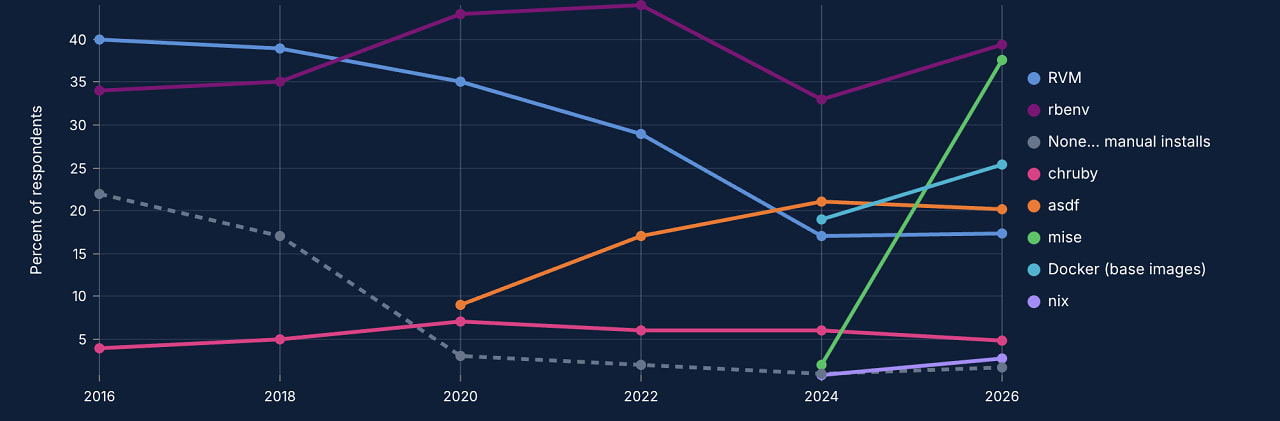
📊 The 2026 Rails Community Survey Results — The results show a community favoring a familiar core stack (monolith, Postgres, Puma), a huge jump in adoption of mise, RSpec remaining the most popular testing framework, and widespread AI adoption, while half worry about the long-term value of their skills. Planet Argon |
💡 If you want something to read or listen to, you can also find out what people's favorite Ruby books and favorite Ruby podcasts are. |
🚨 Rails 8.0 Support Ends Nov 7. Upgrade on Autopilot — Our AI agent opens small upgrade PRs only when your own CI is green, and dual-boots your application with FastRuby.io® | AI-native Upgrades on Autopilot sponsor |
|
Static Analysis for the Uninitialized — Aaron, working through a static analysis textbook, builds an analyzer from scratch to find "possibly uninitialized variables" in Ruby. Sounds in the weeds, but by the end it parses real Ruby with Prism and flags a Aaron 'Tenderlove' Patterson |
💡 On the topic of Prism, there's some big news this week – see Code & Tools. |
|
⚡️ IN BRIEF:
|
|
Rails is a JIT Compiler (Or: How Aaron Made Enums 4.5x Faster) — Rails' Max Bernstein (Rails at Scale) |
|
Rails Analytics on the Postgres You Already Know — TimescaleDB extends the Postgres behind your app so dashboards stay fast as data grows. Get $1000 credit to start. Tiger Data (creators of TimescaleDB) sponsor |
|
📄 Does Rails Still Make Sense? – Spoiler: yes. A good retort to anyone asking why you don't just get an LLM to rewrite all your apps in Rust. Dirk Jonker 📄 Eight Months in Next.js: A Rails Developer's Field Notes – An even-handed look at what Rails hands you for free. Werner Petrick (Puzzl) 📄 Short Written Summaries of 24 Rails World 2026 Talks – Handy if you skipped the videos! Yaroslav Shmarov |
🛠 Code & Tools |
|
|
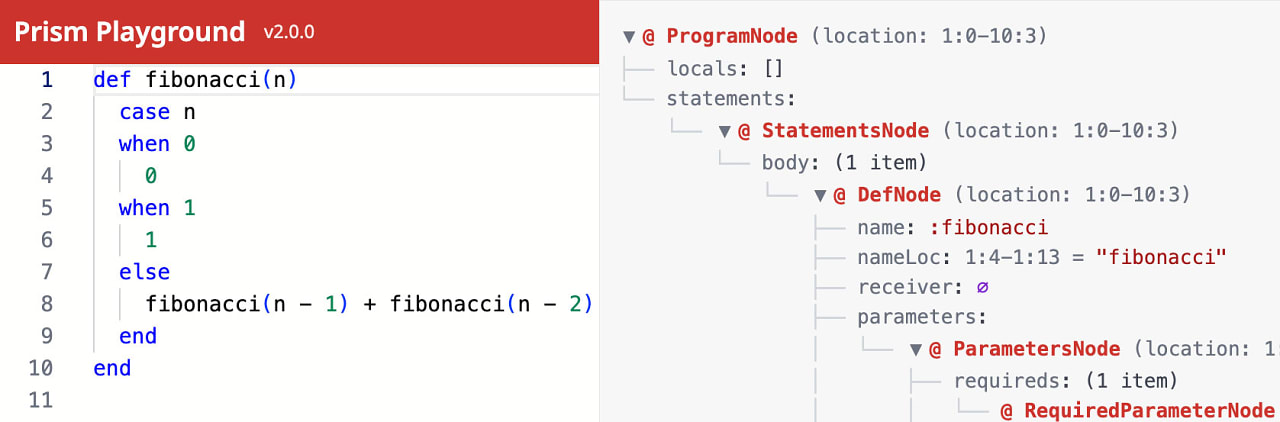
Prism 2.0: Ruby's Parser Gets Its First Major Release in Two Years — Prism now underpins CRuby, Ruby LSP and RuboCop, so you're using it even if you never call it directly. It's now faster and leaner, with precompiled platform gems, complete RBS and RBI definitions, a C++ API, and Ruby 4.1 syntax support. There's also a Web-based playground where you can give it a spin. Kevin Newton et al. |
|
Net::SSH 8.0: The Pure Ruby SSH Client Library — The first major release since 2022. Ed25519, X25519 and ChaCha20 now come from the Miklós Fazekas et al. |
|
Tired of Writing NRQL? AppSignal Builds Your Rails Dashboards for You — Dashboards that build themselves, plus deploy markers and uptime checks. Unlimited users, 30-day trial, no credit card. AppSignal sponsor |
|
Introducing RuboCop Spellcheck — A RuboCop plugin for checking spelling in Ruby comments, strings, identifiers, Markdown, RDoc, AsciiDoc, and plain text. Daniel Doubrovkine |
|
Digging into Ruby's past… |
|
I've been working with Ruby for 22 years, but last week I noticed Ryan Davis (of Seattle.rb and Minitest fame) celebrating his 26th anniversary of using Ruby, and it got me thinking about Ruby's history which goes far beyond even that. Ruby's 33 years old, so there's plenty of history to go over if you can find it amid the linkrot. Last week I discovered a new lead: a site which archives hundreds of programming mailing lists all the way back to the 90s. Today, I've been (very) slowly going through the archives to find interesting tidbits, so I wanted to share a few bits from the late 90s I enjoyed:
If you have any interesting data dumps, archives, or similar things relating to Ruby's ancient history – especially community stuff – hit reply and let me know, as I'd love to unearth any interesting gems, ideas, or discussions going on back in the day. |